

As AI tools become increasingly sophisticated, artists across the country are grappling with urgent questions about the future of human creativity.
Art students who recently attended the seminar titled “Deepening the Conversation on Art, AI and Respect in the Classroom” left conveying a complex range of emotions on AI’s place in art, sparking a series of local debates and discussions over the past few weeks.
Tabitha Nikolai, Interim Gallery Director for the Contemporary Art Gallery, said during the seminar, “We are experiencing a society that we are not wired for evolutionarily.”
Much of this fear stems from AI’s ability to take from pre-existing art available on the web and copy artists’ unique styles, with its capabilities evolving rapidly. Questions surrounding the need for artists have risen internally among the community, as well as externally.
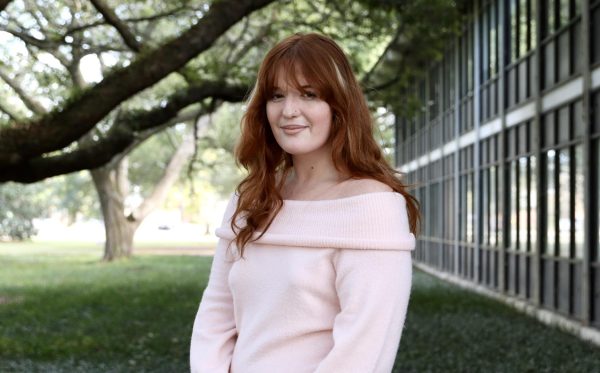
Summer Slusher, a junior general arts major, said, “It feels so hopeless, you know? It’s going to suck the soul out of so many artists. What’s the point of me becoming an artist if a machine can do my work?”
Nate Sherman, a senior animation major, also expressed explicit discomfort over AI in art.
“It’s an existential crisis. Someone will give me an AI-generated image, and I have to put that on a flyer or a poster. Part of me is a little bit uncomfortable with that, but it feels like an inevitability,” Sherman said.
Sherman theorized the potential for a renaissance born of AI’s prominence, much as art adapted after the invention of photography.
Though some artists are discouraged by AI’s presence, their education is now beginning to include classroom conversations on AI’s capabilities and its integration into their artwork.
Henry Foster, a senior art major, said students should be more open to the changing climate, particularly regarding AI use.
“You’re going to waste all your energy trying to be against it, and you’re never going to win that battle. I think you have to embrace it, you know? You need to be able to say that you’re proficient in AI; companies look for that,” Foster said.
Nikolai said widespread AI use shows no signs of stopping.
“I don’t think the industry is going to stop. We’re moving towards a world where people want to produce really bespoke or responsive experiences, whether it’s film or video games, and they’re going to use your data, I think everybody’s got to decide what kind of world they want to live in,” Nikolai said.
Artificial intelligence’s position in society is here, and it is a necessity to face and discuss. With its uncanny convenience, artists and consumers alike must now ask themselves: What do we want our future to look like? Whether it involves cohabitation with artificial intelligence or its complete removal, students and professors similarly implore action and consistent, productive conversation.