
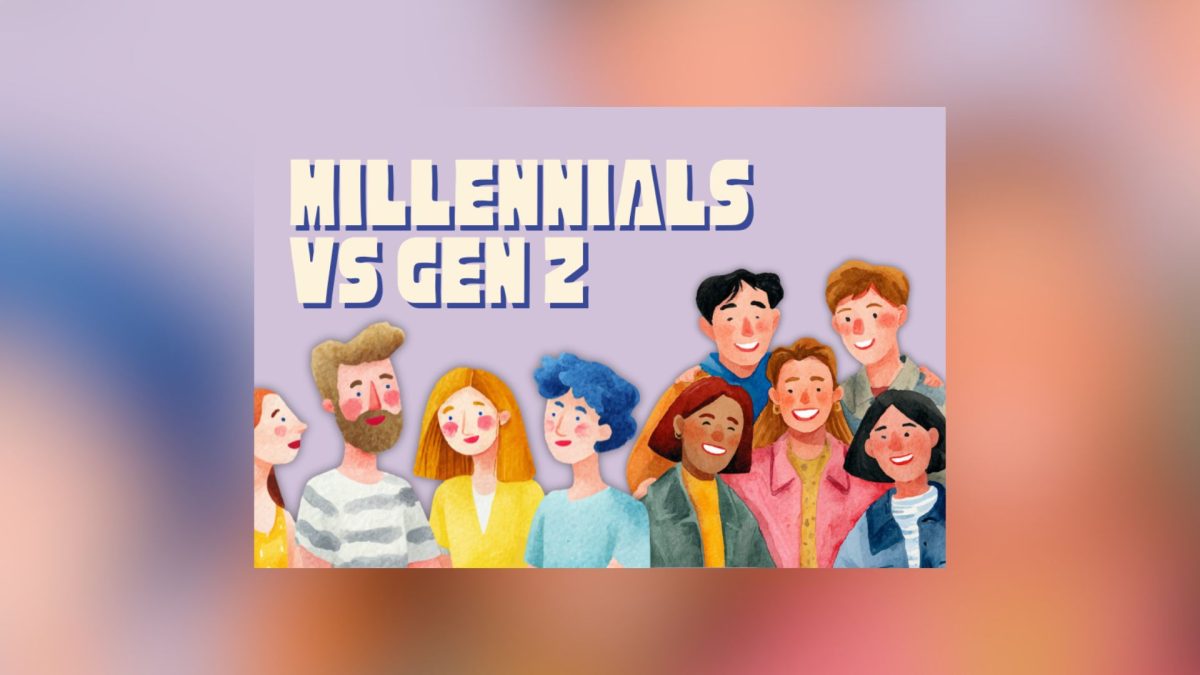
The early 2010s was a decade marked by galaxy print, Avicii’s EDM and embracing the “hipster” lifestyle. Regardless of an individual’s age, it seems that everyone can reflect on the 2010s as a simpler time, one of great change.
In contrast, 2020 ushered in a decade of uncertainty and dread that has altered society for the worse.
While millennials launched into their young adulthood in the vibrant decade of the 2010s, fueling their optimism and hope for their future, Gen Z has been met with the pessimistic and doomscrolling landscape of the 2020s.
I was born in 2003. I was a young girl during the 2010s and I’m now a young adult in the 2020s. Of course, getting older and having adult responsibilities can dim some of the childhood nostalgia, but I feel that’s not the only reason why things seem bleaker now.
The evolving digital playground has fundamentally shifted how people treat each other.
In the 2010s, Instagram encouraged creativity and risk taking when it came to posts. A “successful” profile meant impressing friends rather than the world. Back then, users favored heavy filters and casual, everyday shots. While some similar habits remain, today’s social media operates on a much more systemic algorithm.
Today’s Instagram feels more calculated, preformative and is considered “content” to be profited off of a wide audience. Instagram feeds don’t feel as personal or artistic as they once did. Now, I am seeing younger individuals strive for that “perfect” feed and treat their social media accounts more seriously.
The changes in aesthetics are not the most worrying thing, though. As reported by the Common Sense Census, “From 2015 to 2019, media use for tweens grew only 3%, and for teens, 11%. But from 2019 to 2021 alone, media use grew by 17%.” Increased screen time is concerning during these critical stages of development and for their overall mental health.
In 2011, the Centers for Disease Control and Prevention found the rate of teenagers reporting persistent feelings of sadness or hopelessness had escalated by nearly 50%, reaching a record high of 42%. I have seen firsthand the detrimental shift in the social media landscape over the last two decades. What was once a space for expressing individuality has become a high-pressure, high-consequence environment.
I think another major contributor to the heavy feelings of today’s young adults is the contrast in the political atmosphere. Former President Barack Obama campaigned on the idea of “hope and change” for Americans. There were huge shifts in legislation, such as marriage equality for same-sex couples in 2015 and the passage of the Affordable Care Act in 2010.
With Obama being the first Black President, minorities in America were also feeling heard and represented.
There is a clear difference in the overall attitude of today’s young adults. In 2010, 56% of young American adults considered the “American Dream” to still hold true. By 2024, that number dropped to 21%, according to an ABC and Ipsos poll.
Ironically, the American Dream is defined as “a happy way of living…that can be achieved by anyone in the U.S., especially by working hard and becoming successful.”
This disillusionment regarding the American Dream isn’t without reason; childcare costs are far outpacing income growth. Regarding marriage, kids and the money needed for both, some millennials and Gen Z view these traditional stages as luxuries rather than certainties.
I feel millennials were a generation to redefine traditional values, not only because there was a large social push for change and hope, but also because the economic climate of their young adulthood would not support traditional paths. Now, as the economic hurdles of the past decade have solidified for the next generation, Gen Z is forced to follow suit in delaying traditional milestones of adulthood.
Harvard’s Joint Center for Housing Studies found that the national home price-to-income ratio has escalated to 5.6 times the average income, a large jump from the 3.0 average seen in the early 2010s. Where millennials saw a wobbling ladder towards stability, Gen Z sees a wall that seems impossible to break through.
When the weight of our economic reality becomes too overwhelming, it’s only natural to make sacrifices. Gen Z has had to sacrifice most of what we consider the American Dream.
Often, Gen Z has classified millennials as “cringe,” when I think we truly look back at their early adulthood with jealousy and the hope that our young adulthood can match their sense of individuality and excitement.
Gen Z’s collective nostalgia has culminated in the viral “2026 is the new 2016” trend. Originating on TikTok, the movement encourages users to resurrect the aesthetics of 2016 as a way to reclaim the sense of excitement and simplicity that characterized their youth, ultimately using nostalgia as a shield against the present.
The “10-year nostalgia cycle” is a theory centered around the idea that trends resurface in popularity after a decade. I believe that Gen Z is currently practicing this theory not just for the fashion and internet trends, but for the sense of optimism that defined their youth.
Gen Z is reflecting back on a time when the world felt expansive rather than exhausting, and with a focus of optimism, individuality and a renewed sense of agency, there is hope that Gen Z can reshape their future into a more promising conclusion than the present suggests.