

Students gathered in the Student Union Theater Tuesday evening for the SGA Town Hall to address proposed increases in several student fees, prompting discussion of both the benefits to campus life and concerns about rising costs.
The forum, which served as the final tabling event before voting closes today at 4:30 p.m., featured student leaders, program representatives and an open mic session where attendees could ask questions and share concerns. Organizers said the goal was to provide transparency and allow students to make informed decisions.
Kyle Hidalgo, SGA’s director of outreach, emphasized the importance of student participation. “Your vote determines the future of these campus resources, programs and services,” Hidalgo said.
Presenters outlined five proposed fee increases affecting campus transportation, recreation, athletics, spirit programs and campus activities. Supporters argued the increases are necessary to maintain and improve services that directly impact students.
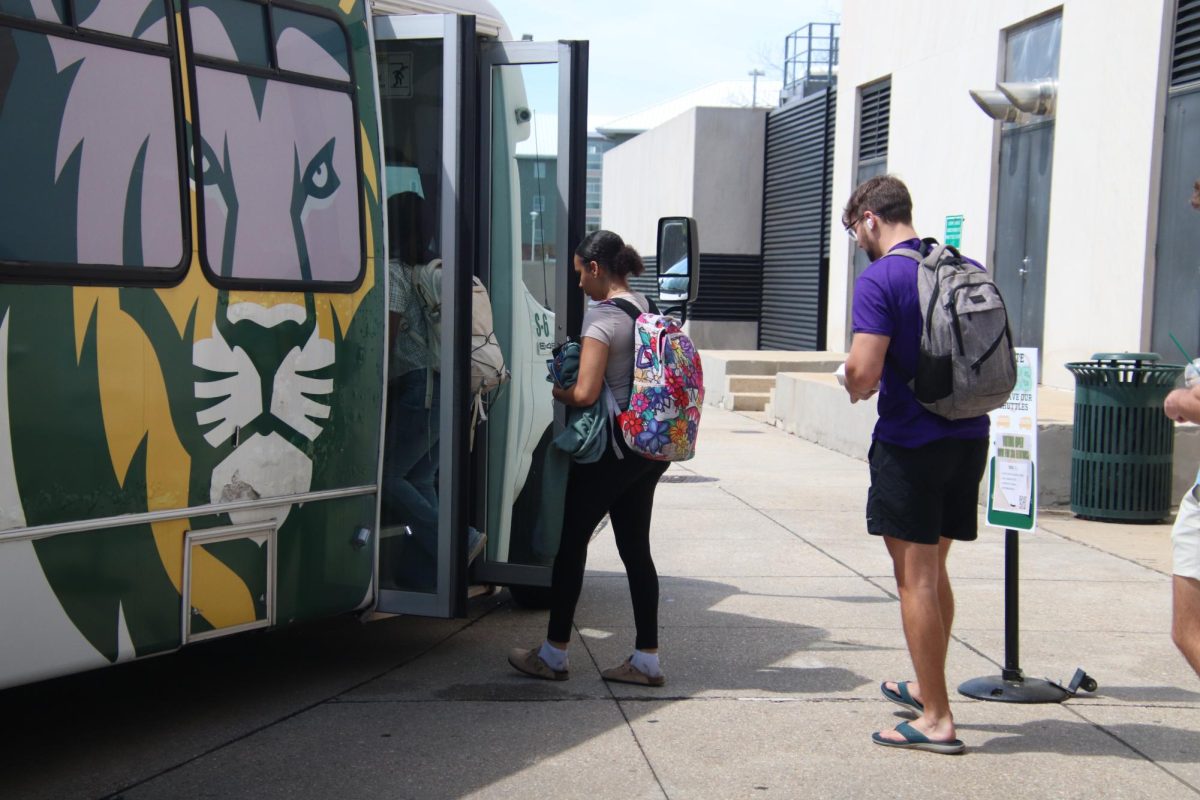
The campus shuttle fee, proposed to increase from $12 to $25, was framed as essential to sustaining transportation services.
Representatives cited rising costs for maintenance, insurance and wages, warning that without additional funding, the system could face downsizing within the next few years.
Graduate student Samantha Randall shared how the service became critical after she broke her leg. “The shuttle bus became a really big necessity for me just to get to my classes,” Randall said.
Similarly, the REC proposed raising its fee from $21 to $41 to replace aging equipment and expand services. Alyssa Turco, a junior and a REC employee, said the facility plays a central role in student well-being.
“Every single day that I go to work, I see so many students who get so much benefit from the REC,” Turco said.
Athletics representatives highlighted the need for increased funding to support student-athletes, particularly those without scholarships. Lindsay Allen, a former student-athlete, said athletics provides more than competition.
“It’s about people, mentorship and opportunities that extend beyond the field,” Allen said, noting that many athletes balance academics, training and jobs while paying their own way through school.
Spirit program representatives echoed similar concerns about limited funding. Carson Walters, a senior involved in spirit initiatives, said increased support would allow for more participation and visibility at campus events.
“The more people we have, the more events we can attend and the more energy we can bring to campus,” Walters said.
The Campus Activities Board (CAB) also proposed a fee increase, citing rising costs for events such as Strawberry Jubilee and Gumbo Ya Ya. CAB Chair Raymond Johnson said these events are vital to student engagement.
“Students seek more than academic success. They need to feel seen, engaged and connected,” Johnson said.
While many speakers emphasized the potential improvements, students in attendance raised concerns about affordability and fairness. Some questioned how the fees would benefit those who do not use certain services, particularly athletics or recreational facilities.
One student asked how the increases would impact those already struggling with tuition and living expenses. Others expressed concern about being required to pay for services they may not use.
In response, presenters explained that the benefits extend beyond individual use. Representatives noted that athletics, for example, provides opportunities for students in fields such as marketing, communications and sports management. At the same time, campus events and spirit programs contribute to overall school culture and student engagement.
Organizers also emphasized that the increases are intended not only to expand services but to prevent cuts. Without additional funding, several programs could face reduced hours, fewer events or limited resources in the coming years.
If all proposed increases are approved, the total cost would rise by approximately $59 per student, according to SGA.
The discussion reflected a broader tension between maintaining affordability and investing in campus life. Supporters argued that the fees are necessary to preserve and enhance the student experience, while critics questioned whether the added financial burden is justified.
With voting set to close March 25 at 4:30 p.m., the decision now rests with the student body, whose votes will determine the future of these programs at Southeastern.