

In celebration of Black History Month, our Black staff members discussed how their work at The Lion’s Roar and at Southeastern connects to their identity.
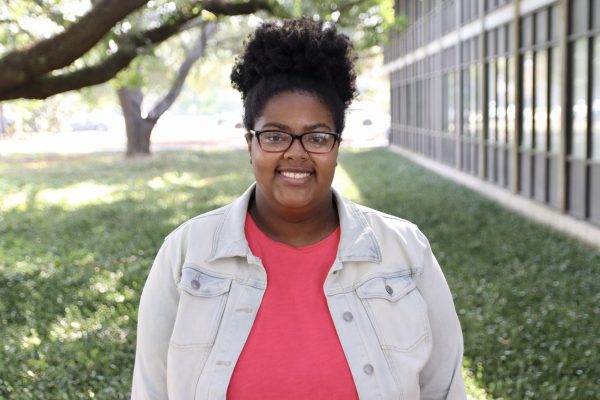
Q: Does your college experience – both in undergrad and graduate studies – connect to your identity as a Black woman? If so, how?
A: As a Black woman, my undergraduate experience taught me to be resilient and to believe in myself. When I first started college, I honestly didn’t feel like I belonged.
I had to push myself out of my comfort zone and find where I fit in. By joining organizations while in my undergraduate studies, I was able to better navigate spaces where I felt invisible.
Some skills can’t be taught in a classroom and require learning through experience. Student Publications gave me skills to be more intentional with my words. I learned to tell stories not only through words but also through images, and learning to connect the two is important in both my undergraduate and graduate studies.
Zeta Phi Beta Sorority, Incorporated, gave me the opportunity to gain confidence as a leader. My sorority helped me realize I can remain true to myself and still be worthy to sit in a room with other leaders.
These experiences helped build valuable skills through trial and error. They taught me that my voice is important and deserves to be heard.
This is important in strategic communication because messages have a greater impact when they come across as confident, authentic and intentional.

Q: What does your role as a Web Content Manager for The Lion’s Roar involve, and what does it mean for you to be trusted to handle all things on the website?
A: My role for The Lion’s Roar as their Web Content Manager consists of making sure that the webpage is formatted in an easy-to-read manner and making sure the website is accessible and easy to navigate for everyone.
Being trusted with this role means a lot to me because I get to use soft technical skills that I can develop and use later on for my career in the future.
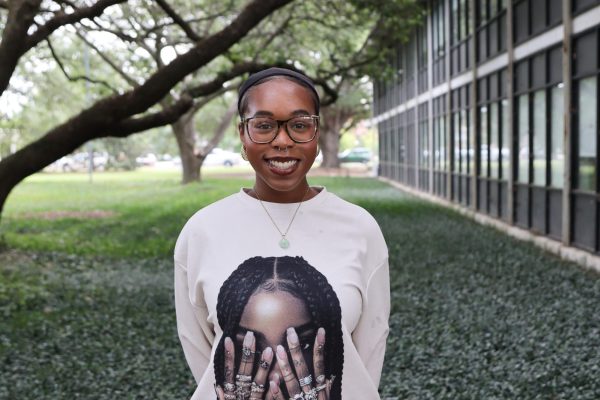
Q: As a staff reporter for The Lion’s Roar, how is your passion for journalism being influenced by your fellow Black staff reporters?
A: Working alongside other Black staff reporters has honestly made me more confident and intentional in the way I approach journalism.
Seeing how they center our community’s stories and bring real authenticity into the newsroom pushes me beyond my own standards. Being around that kind of energy makes the work feel even more meaningful.

Q: As a staff reporter and graphic designer for The Lion’s Roar, how do your fellow Black staff reporters inspire your writing and art?
A: As a staff reporter and graphic designer for The Lion’s Roar, my fellow Black staff reporters inspire me through passion.
They remind me that I have a voice in my writing and art, and they’ve helped me to grow into that voice. The team is dedicated to what they do around me and it motivates my creativity to reflect and have a purpose.

Q: You serve in several important roles for various departments and offices across campus, including Student Publications, SLU Athletics and the communication department. How does being a Black woman come into play for your work? Do you see your work around campus as uplifting for other Black students?
A: Being a Black woman absolutely shapes the way I move through every space I’m in on campus.
Whether I’m working with Student Publications, SLU Athletics, or the communication department, I understand that I’m not just representing myself, I’m representing possibility.
In many rooms, especially in sports and media, we are still underrepresented. That awareness fuels the excellence and intention I bring to my work.
As a Black woman in communications and athletics, I’m very aware of how narratives are shaped and who gets visibility.
I’m passionate about telling stories that reflect the diversity of our campus and ensuring that Black students, athletes, and creatives feel seen and valued. Representation in media spaces matters, and I take that responsibility seriously.
I do hope my presence and work are uplifting to other Black students. If another student sees me balancing leadership roles, producing content, leading projects, and pursuing a master’s degree and thinks, “I can do that too,” then that means everything.
I want my work to serve as both proof and encouragement that we belong in these spaces, we can lead in these spaces, and we can redefine them.
It’s all about legacy to me, but it’s also about momentum. I see my work as contributing to that momentum. We’re creating pathways, opening doors, and making sure the next generation walks into rooms where they don’t feel like the only one.

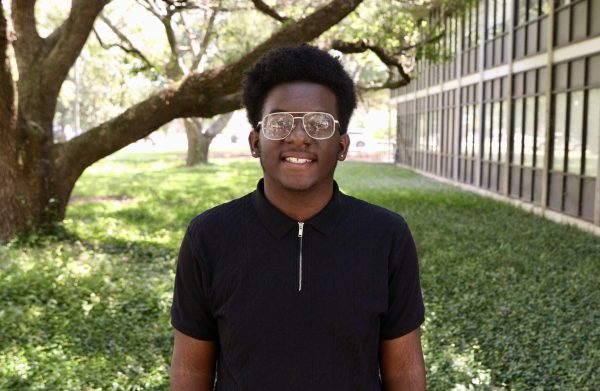
Q: You are The Lion’s Roar editor-in-chief and are about to graduate. As a Black man, how does it feel to have such an important role, and what do you hope to leave behind?
A: I’ve served as editor-in-chief of The Lion’s Roar for the last two years, and it has been among the greatest joys of my life. It is truly humbling to serve in this role.
For my Black co-workers and other Black students, I hope my time as editor-in-chief shows that your potential is limitless. Your perspective, experiences and expertise are invaluable, and you will succeed, regardless of longstanding stereotypes about Black people.
I hope Black students also see it’s okay to struggle sometimes. I have not been perfect in this role, and I have failed more often than I would like to admit. Nevertheless, I came back after each failure with renewed optimism, eager to right the ship and provide The Lion’s Roar staff with the quality leadership they deserve.
Once I graduate in May, I hope to leave behind a legacy of boldness, innovation and inclusivity. I wasn’t afraid to try new things, even if it meant failing or recalibrating our approach.
From day one, my primary goal was to foster an open, inclusive community in the office, and expand our reach and awareness around campus.
If people feel at home in The Lion’s Roar, and they feel they have the tools in place to succeed and have fun, then I can leave knowing I did my job right.