


To many people, a club built around animal alter egos, “fursonas,” might sound more like a joke waiting to land.
Owen Elston has heard that before, yet he doesn’t laugh.
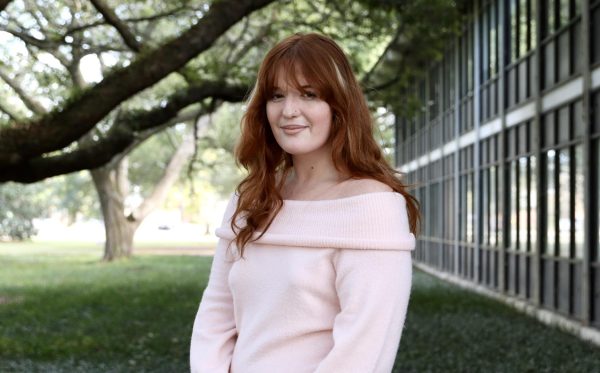
As president of Southeastern Louisiana University’s furry club, the SELU Fur Pack, Elston sees something else entirely: a room filled to the brim with people who finally don’t have to explain themselves.
Elston, a junior history major, argues that a sense of acceptance isn’t quite automatic. It is something that must be built slowly and methodically—meeting by meeting, conversation by conversation, until new faces stop hovering and begin pulling up chairs.
“It’s a community for people to appreciate a niche form of art; to be creative, feel accepted and loved in a place where maybe they haven’t felt that for a very long time,” Elston said.
For Elston, this sense of connection predates the Fur Pack when he traced it back to early YouTube rabbit holes – grainy convention clips, dancers in oversized suits.
It was an expression, people flourishing solely within their identity. He was young, had unrestricted internet access and was captivated.
“Yeah, I got a phone way too young,” he said, laughing. “There were videos from conventions, and there were people in their first fursuits dancing. Just being able to really see people lose themselves to a character and have a great time… It’s amazing.”
This spark of adolescent fascination eventually morphed into something more deliberate. On a campus where students orbit their own social circles, Elston toiled to carve out a place where people with the same niche interest could find their people without hesitation or judgment.
As of now, Elston divides his time between leading the Fur Pack and studying history, two identities he doesn’t view as separate.
Online, he delivers short-form videos that engage with audiences, blending history and passion via the same energy that drew him in. The response, he said, has been wider than most people might assume.
“By making these videos, I have met furries who are historical reenactors, pilots, geologists and informants at national parks … And you know what? It shows there’s something for everybody to branch out. Sharing passion and respect, we need that today,” he said.
This overlap among identity, creativity, and everyday life is what sparked the club’s inception. In the grand scheme of things, the Fur Pack exists due to hesitation as much as to enthusiasm.
Prior to the club, Elston recalls walking around campus in his fursuit, only to be promptly stopped by meek yet overtly curious and excited students.
“People would come up and say, ‘I’m afraid to do this.’ And eventually I decided there were so many people that’d talked to me, I could only imagine who hadn’t,” Elston said.
So he built something for them too, somewhere they didn’t have to share their reservations and overwhelming fears.
Outside the club, however, a slew of misconceptions often accompany the term “furry.”
Long defined by the power of online stereotypes, the community is often misunderstood as something inherently sexual – a characterization that Elston condemns as both inaccurate and limiting
“People always assume the worst,” he said. “They just choose not to see anything good in it – especially in the South.”
Despite these varied perceptions, Elston described the Fur Pack as something escapist; a haven where creativity and identity coexist free of judgment.
Within its own corner of campus life, SLU’s Fur Pack hosts welcome nights, trivia events and art sessions that revolve around creativity and community.
Recently, the club expanded beyond campus, collaborating with groups such as Tulane’s furry club, the Nola Furball Society, and LSU’s furry club to bring Krewe du Fleuxe to Tulane for a celebration of Mardi Gras and diversity.
But the moments that stick with Elston aren’t necessarily the organized ones.
He recalls being out in his suit in New Orleans with a group of friends when they noticed a young girl wearing cat ears and a tail.
They stopped to compliment her outfit. What seemed small was actually quite the opposite.
Her mother later explained that the girl had been homeschooled after facing severe bullying for her self-expression.
When she realized there were communities and people older than her who shared the same interests, Elston said, she began to cry.
For Elston, this put everything he’d done up to this point into perspective. This is what he lived for and worked for.
What the Fur Pack offers isn’t all that complex; it’s a place to find security within. It’s a place to experiment, to fail; a place for people who aren’t always sure where they fit to sit down anyway.
What began as late-night videos and suppressed curiosity has turned into something far more visible. A campus community, directly impacted by what built it in the very first place: people showing up, finding each other, and deciding to stay.







J • Apr 28, 2026 at 5:50 pm
This is such a wonderful story and I love how it has been realized here in this article. Great work!! Can’t wait to read more like this