

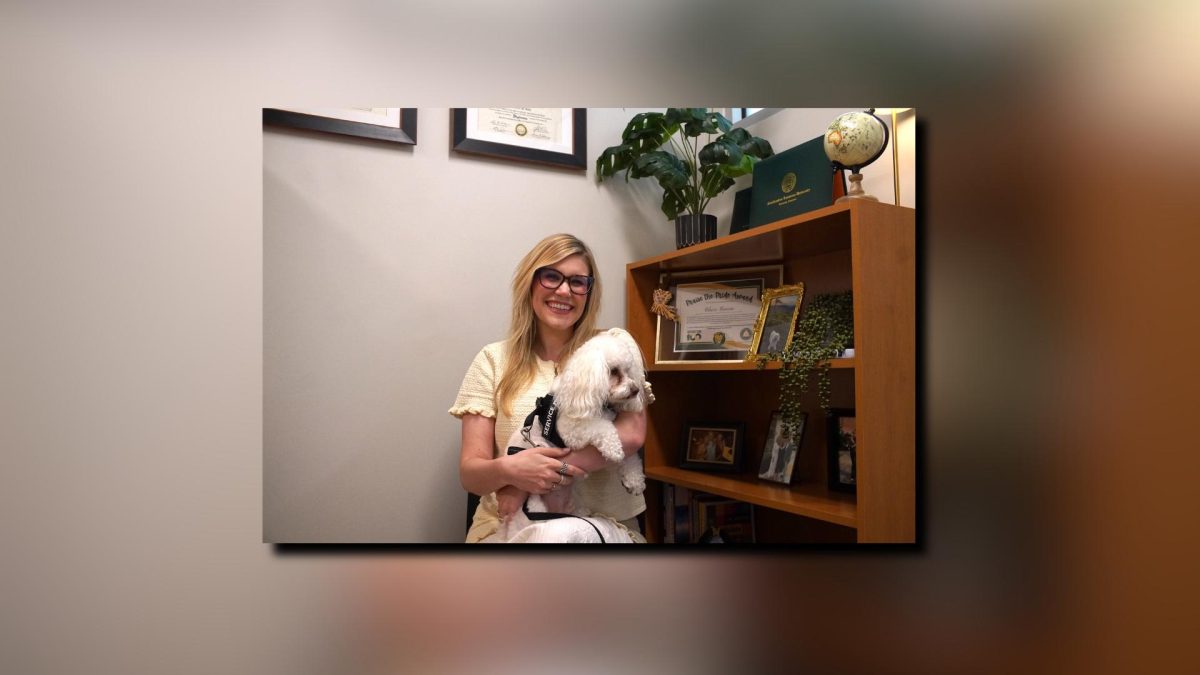
As service animals become more visible on college campuses, one classroom has become a small example of how students and instructors adapt to learning alongside them.
At Southeastern, service animals are rare, but they serve a practical use. They play important roles in the lives of students and instructors alike, and especially in the classroom.
Service animals act as both physical and emotional aides, and sharing a classroom with a service animal gives students the opportunity to see how accessibility tools function in real time. One such case is Claire Cuccia, an instructor in the Communication and Media Studies Department.
“Having a medical service animal in the classroom is nothing but a positive impact on the teacher and the students,” Cuccia said, regarding her service animal Pepe and his presence in the classroom. “It has provided a whole new level of comfort and support and lowered anxiety for my students, especially in a high-anxiety class, where students may be nervous to speak in front of the class.”
Cuccia said Pepe even has a positive impact outside of the classroom. “He’s been a comfort for coworkers, for students who are not in my class and students who are in my class currently and past students as well.”
Additionally, Cuccia said Pepe even has a positive impact on her. “He just makes work so fun for me, and he’s like bringing a little slice of home to work.It’s a great way for students to get to know me better because they get to see my pet, and so they get to see a different side of me. That way, they feel relaxed and ready to learn as well.”
Cuccia also said she believes that more people should have their well-behaved dogs certified for service animal work, as it not only benefits students but also their owners.
A student from one of Cuccia’s classes, Aarin Godfrey, shared their experience of having Pepe in the classroom. “I think Pepe makes everyone feel comfortable in her class, and it gives people an incentive to come to class.”
“I think if the professor is professional enough and is responsible for their animal, then there should be no problem with them having a service animal. Pepe is great, and there should be more dogs like him,” Godfrey said.
University policy dictates service animals must be medically certified and that a series of paperwork must be filed with the university and with doctors to ensure the animal is certified to perform specific work on campus.
The process can be completed through Accessibility Services, and although training and certification for animal-in-service work require time, the work the animal can do afterward can bring significant change and relief to those it serves.
Many factors of university life can weigh down on those on campus – exams, classes, mental health problems or physical limitations — along with the recent changes being put into place with the new curriculum changes. With physical and mental stress found far and wide across campus, having a service animal available is an advantage for anyone, both students and instructors alike.
For information on policies for service animals or accessibility services, contact Student Accessibility Services Director Kimberly Bergeron at 985-549-2247 or [email protected].